Mexico as a Global Industrial Hub: Investment Opportunities in Manufacturing and Supply Chain
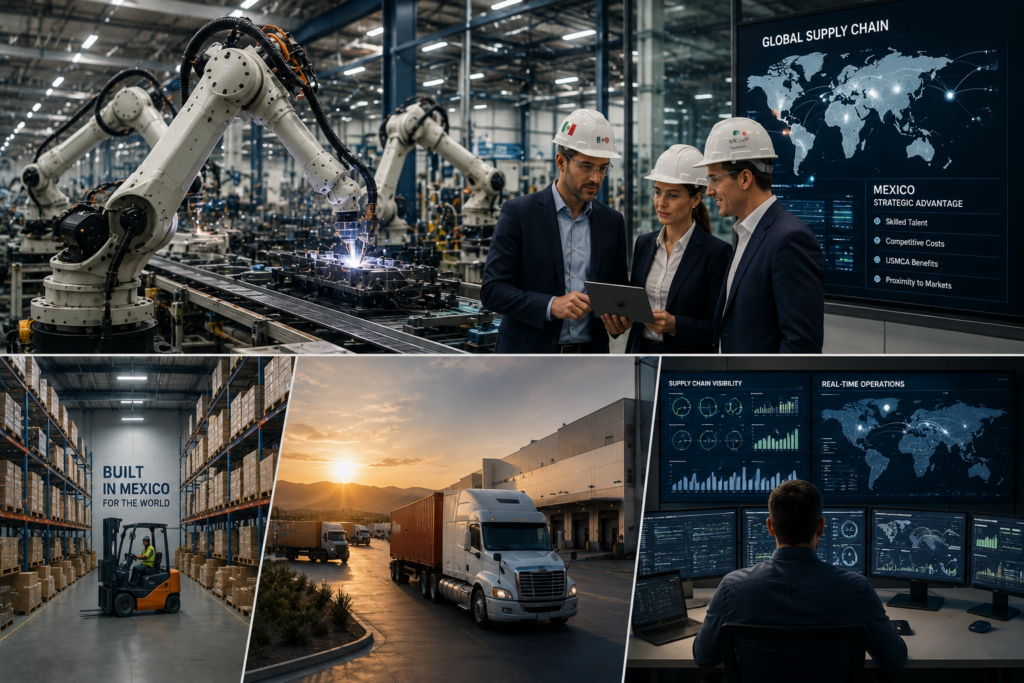
Mexico as a Global Industrial Hub: Investment Opportunities in Manufacturing and Supply Chain
Mexico has consolidated itself as one of the world’s leading industrial and manufacturing centers. Over the last few years, the growth of nearshoring, the transformation of global supply chains, and the increase in foreign investment have turned the country into a strategic hub for international companies.
Today, European and global companies view Mexico not only as a competitive manufacturing option, but also as a strategic platform for international expansion, logistics, and global trade.
The combination of geographic location, trade agreements, industrial infrastructure, and specialized workforce has strengthened Mexico’s position within the global economy.
Mexico and Its Global Strategic Position
One of the most important factors driving Mexico’s industrial growth is its proximity to the United States and Canada.
This allows companies to reduce logistics times, optimize operations, and maintain a more efficient supply chain compared to other international markets.
In addition, the USMCA/T-MEC agreement has strengthened regional trade and created new investment opportunities in advanced manufacturing, logistics, and industrial production.
Today, Mexico is one of the United States’ most important trading partners, driving strategic sectors such as:
- Automotive
- Electronics
- Aerospace
- Technology
- Medical Devices
- Logistics
- Marketing Digital
Growth of Nearshoring and Manufacturing
Nearshoring has accelerated the arrival of new industrial investments into the country.
Many international companies are relocating operations from Asia to Mexico with the objective of:
- Reduce logistics costs
- Minimize operational risks
- Improve delivery times
- Strengthen supply chains
- Increase regional competitiveness
This transformation is driving the development of new industrial parks, logistics centers, and manufacturing hubs across different regions of the country.
Main Industrial Corridors in Mexico
Several states have become strategic hubs for investment and industrial expansion.
Nuevo León
One of the country’s leading manufacturing and logistics hubs, with strong growth in nearshoring and industrial technology.
Querétaro
Known for its aerospace development, advanced manufacturing, and modern industrial infrastructure.
Guanajuato
An important automotive and industrial production hub for exports.
Jalisco
Known for its technology ecosystem and growth in innovation and electronics.
Coahuila
Highly developed industrial sector with a strong automotive and manufacturing presence.
Sectors with the Greatest Investment Potential
Advanced Manufacturing
Mexico continues strengthening its production capacity in high value-added manufacturing.
Opportunities include:
- Industrial Automation
- Specialized Production
- Advanced engineering
- International export
- Selección de Personal
Cadena de Suministro y Logística
The growth of international trade is driving investments in:
- Distribution centers
- Warehousing
- International transportation
- Logistics infrastructure
- Cross-border trade
Industrial Technology
Industrial digitalization and technological transformation are creating new opportunities for global companies.
Real Estate
The demand for industrial parks and logistics spaces continues to grow rapidly thanks to nearshoring.
Mexico’s Competitive Advantages
Specialized Talent
Mexico has a highly skilled workforce in industrial and technology sectors.
Competitive Operating Costs
Companies can optimize costs without compromising quality or operational efficiency.
Global Trade Access
Trade agreements allow products to be exported to multiple international markets.
Expanding Infrastructure
The country continues developing highways, ports, industrial parks, and strategic logistics centers.
LATAM and the Industrial Future
Mexico also serves as a gateway to Latin America, a region with strong industrial and commercial growth potential.
Sectors such as renewable energy, infrastructure, technology, and agribusiness continue attracting foreign investment throughout the region.
Latin America’s industrial growth will continue driving opportunities for companies seeking sustainable international expansion.
Conclusion
Mexico has become one of the world’s most important industrial hubs thanks to its strategic location, manufacturing capacity, and the growth of nearshoring.
For European and international companies, the country represents a key opportunity to optimize operations, expand markets, and strengthen global supply chains.
The combination of infrastructure, talent, trade agreements, and industrial growth positions Mexico and LATAM as strategic regions for the future of global investment.
 English
  Spanish
  Dutch
Dutch  German